Corrosion Monitoring
ASTM Standard Corrosion Monitoring & Diagnostics
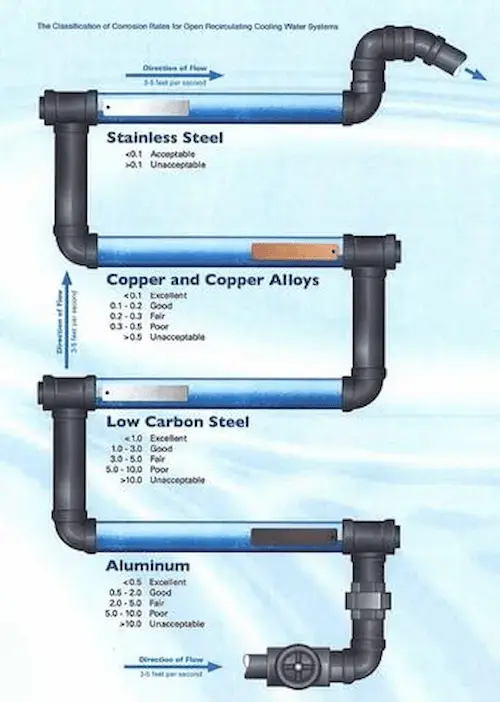
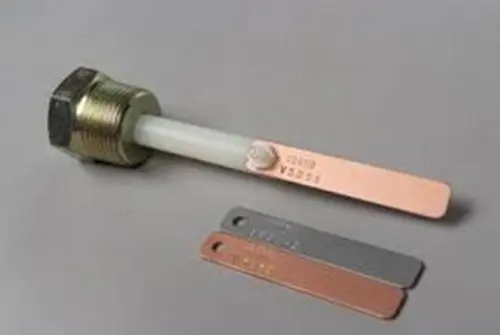
Implementing an engineering-grade corrosion monitoring program is a foundational pillar for evaluating the efficiency and chemical balance of your water treatment protocols. By utilizing standardized, high-precision corrosion coupons, Dubai Water Treatment provides a tangible, empirical measure of internal material degradation.
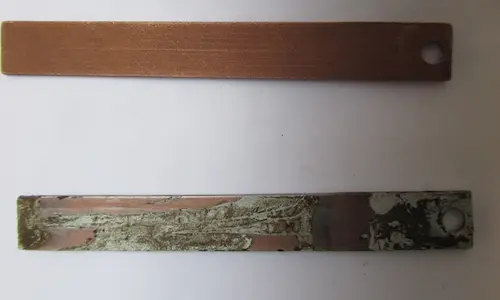
Our technicians systematically remove exposed coupons from active loops to analyze exact structural mass loss. This diagnostic workflow involves precision microscopic inspections to detect localized pitting, oxygen gouging, or uniform thinning. The data gathered allows us to identify active corrosive agents, map out vulnerable grid zones, and continually validate the protective efficiency of your active corrosion inhibitors.
Precision Corrosion Rate Determination (ASTM D2688)
To calculate precise material loss, our laboratory testing adheres strictly to the globally recognized ASTM Standard D2688 guidelines. The analytical process follows a rigid scientific sequence:
- Pre-Weighed baseline: Standardized metallurgy specimens are weighed to four decimal places prior to loop insertion.
- Chemical Cleaning & Descaling: Following field exposure, the coupons are carefully stripped of surface bio-fouling and mineral scale using non-aggressive chemical solutions.
- Mass Loss Reweighing: The clean coupons are re-weighed to determine exact material weight loss.
- mpy Metric Calculation: Mass loss is mathematically converted into an industry-standard mils per year (mpy) corrosion rate.
This precise metric gives operators the clear insights required to deploy corrective chemical dosing, defend system integrity, and eliminate the risk of unexpected structural failures.
Specialized Turnkey Field Services in Dubai
Our professional corrosion coupon monitoring services are meticulously engineered to protect expensive mechanical systems across the UAE’s high-demand sectors:
- Open-Loop Cooling Towers: Defending metal components from severe oxidation driven by continuous evaporation and desert dust accumulation.
- Closed-Loop Chilled Water Networks: Continually validating the strength of your chemical passivating film to protect HVAC chiller barrels.
- Industrial Boiler Feedwater Systems: Monitoring thermal loops to prevent catastrophic pitting corrosion on high-pressure steam tubes.
Corrosion Rate Monitoring During Chemical Cleaning Operations
Integrating active corrosion monitoring during an aggressive chemical cleaning process is a critical step required to identify and mitigate the side effects of descaling acids on boiler internals, cooling towers, and condenser tubes. While chemical flushing is essential to clear insulating scale and biological fouling, the highly reactive nature of cleaning solvents can inadvertently trigger accelerated metal degradation.
By running inline, real-time corrosion monitoring during the flush, our engineering team can dynamically calibrate chemical concentrations, adjust system exposure timelines, and optimize circulating velocities. This proactive chemical management ensures that the descaling procedure successfully restores maximum thermal efficiency without causing long-term structural thinning or damaging critical metallurgy.