
Chemical Pot Feeder Manufacturer in Dubai | Carbon Steel & Stainless Steel
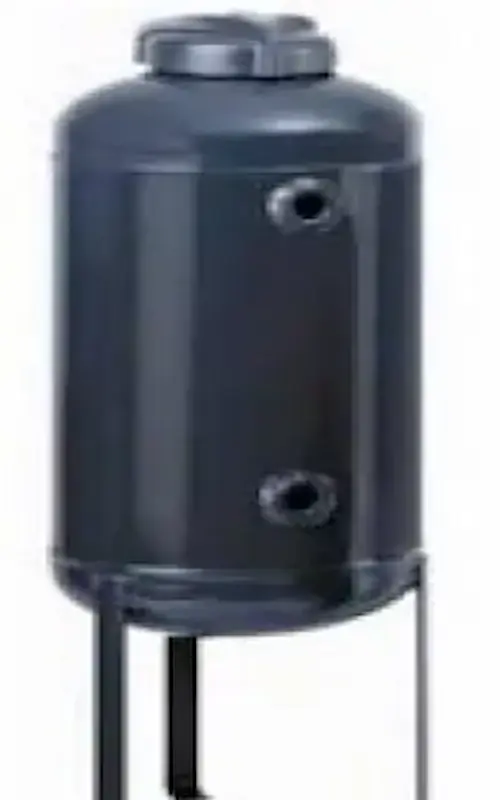
Closed-Loop Chilled Water Bypass Pot Feeders Manufactured in Dubai
A chemical pot feeder (also known as a chemical bypass feeder or shot feeder) is the industry-standard dosing vessel for safely introducing water treatment chemicals into closed-loop HVAC chilled water circuits, hot water loops, and process cooling systems.
At Dubai Water Treatment, we locally manufacture heavy-duty chemical pot feeders in the UAE in both Epoxy-Coated Carbon Steel and Stainless Steel (SS304 / SS316)—giving MEP contractors and facility teams fast local delivery and ready Dubai stock.
Installed on a side-stream bypass across your primary chilled water pumps, our 150 PSI rated vessels use natural system pressure differential to distribute corrosion inhibitors, scale inhibitors, non-oxidizing biocides, and glycol evenly throughout your closed circuit without requiring an electric dosing pump or shutting down chiller operations.
Key Design Features & Construction Advantages
- Carbon Steel & Stainless Steel Fabrication: Manufactured locally in industrial-grade Carbon Steel with anti-corrosion epoxy coating or SS304 / SS316 Stainless Steel for demanding commercial and hospital projects.
- Space-Saving Flat Top & Base Design: Engineered with a precision-welded flat top and high-stability flat bottom base to minimize vertical footprint in tight mechanical plant rooms.
- Full 1″ NPT Connections for Fast Circulation: Equipped with dual 1-inch NPT system inlet/outlet ports and a 1-inch NPT chemical fill port to reduce chemical mixing and recirculation time.
- Complete Valve & Safety Package Ready: Compatible with wide-mouth chemical filling funnels, isolation ball valves, drain valves, air release vents, and optional filter bags to trap suspended solids in closed chilled water loops.
Chemical Pot Feeder Models, Dimensions & Technical Specifications
We manufacture four standard capacities from 25 Liters to 50 Liters, all hydro-tested for reliable operation up to 150 PSI working pressure:
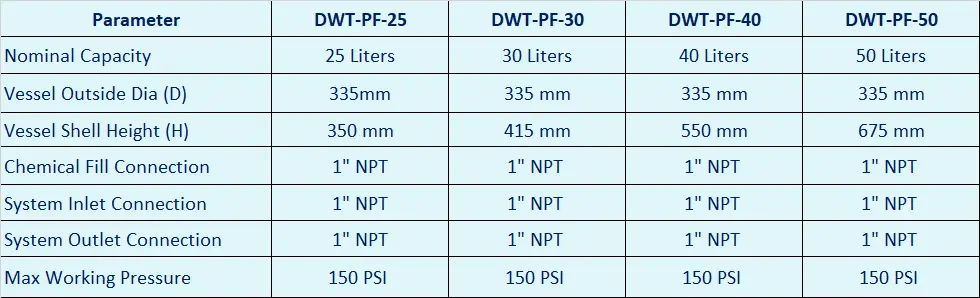
(Note: Custom capacities and higher pressure ratings are available upon request for district cooling and industrial boiler projects).
Primary Applications for Closed-Circuit Water Systems
- HVAC Chilled Water Closed Loops: Safe manual dosing of nitrite, molybdate, or organic corrosion inhibitors to protect chiller barrels, fan coil units, and risers.
- Pre-Commissioning Flushing & Passivation: Introducing cleaning chemicals and passivation inhibitors during new building handovers alongside a corrosion coupon rack and corrosion analysis service.
- Commercial Hot Water & Boiler Loops: Maintaining chemical balance in closed heating circuits and industrial process cooling lines.
Frequently Asked Questions About Chemical Pot Feeders
What is a pot feeder in HVAC chilled water systems?
A pot feeder is a pressurized bypass tank installed parallel to a closed-loop chilled water pump. It allows technicians to safely add corrosion inhibitors, biocides, or glycol into the circulating water using the pump’s natural pressure difference, without needing an electric dosing pump.
How does a chemical bypass pot feeder work?
First, the isolation valves are closed and the tank is depressurized via the drain/vent valve. Liquid water treatment chemicals are poured through the top 1″ NPT fill port, the top cap is sealed, and the inlet/outlet valves are opened—allowing system water to flow through the vessel and carry the chemicals into the main chilled water loop.
Should I choose a Carbon Steel or Stainless Steel pot feeder?
Epoxy-coated Carbon Steel pot feeders are the standard, cost-effective choice for most commercial HVAC chilled water and hot water closed loops up to 150 PSI. Stainless Steel (SS304 or SS316) pot feeders are recommended for hospitals, district cooling plants, aggressive chemical dosing, or projects where consultant specifications mandate all-stainless wetted parts.